
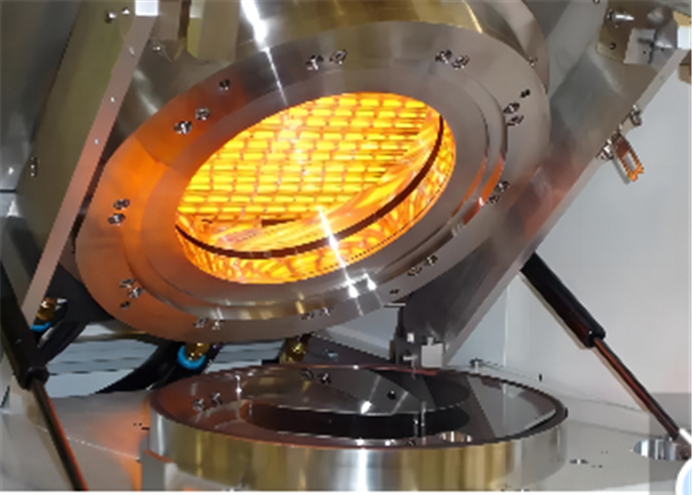
Stopping the “Oven Effect” in Vacuum Chambers
If you’ve ever worked in semiconductor fab, you know the struggle. You need to get a wafer hot, but you don’t want to turn your entire vacuum chamber into an oven. Standard heating usually glows in every direction. In a vacuum, that energy has nowhere to go but into the chamber walls. It’s a mess. The equipment skins get dangerously hot to the touch, and your seals start taking a beating from the heat stress. It’s just wasted energy.
How we actually fix this
We use specialized infrared (IR) lamps to get the heat where it belongs. By using reflective backings or specific coatings, we basically “push” the radiation in one direction. Think of it like a flashlight instead of a bare lightbulb. Instead of a glow that hits everything, the energy is beamed straight at the target. Your substrate gets the heat it needs, but the rest of the shell stays cool. It’s a huge relief for the hardware.
The balancing act
Now, you can’t just throw the highest wattage lamps you can find into a chamber. You have to think about what your cooling system can actually handle. High-density emitters are great because they ramp up the temperature incredibly fast. But they’re hungry for power. We usually pair them with precision controllers so you don’t accidentally overshoot your target temperature. Here’s the thing: if you run a high-wattage array without that directional control, your wall temperatures will spike in minutes. By keeping the energy focused, you can stop worrying about adding bulky water-cooling jackets to every single interior surface. It keeps the build cleaner.
The reality check
Nothing is perfect. These directional lamps have their quirks. Those reflective coatings can wear down if you run the lamps at their absolute limit. After a few thousand hours, you’ll notice the output dip just a bit. It’s not a dealbreaker, but you have to plan for it when you’re setting your process. The trap is trying to “force” the old lamps to perform like new by cranking up the power. If you do that, you’re just going to burn out the filament early. Just keep an eye on the aging, and you’ll be fine.