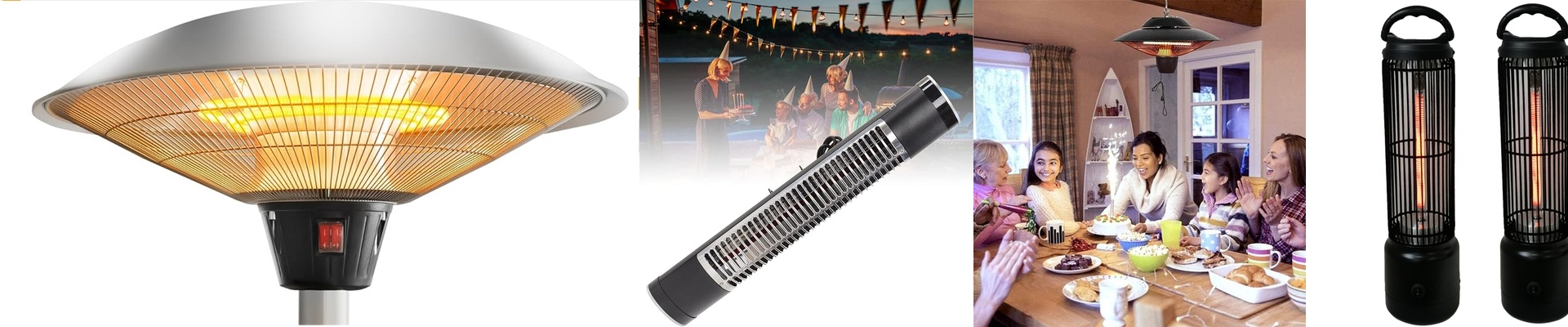
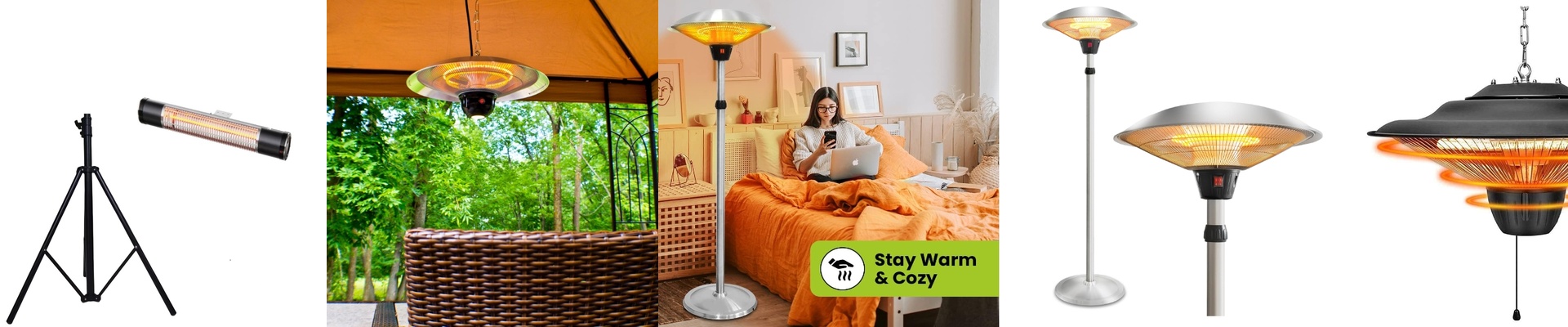
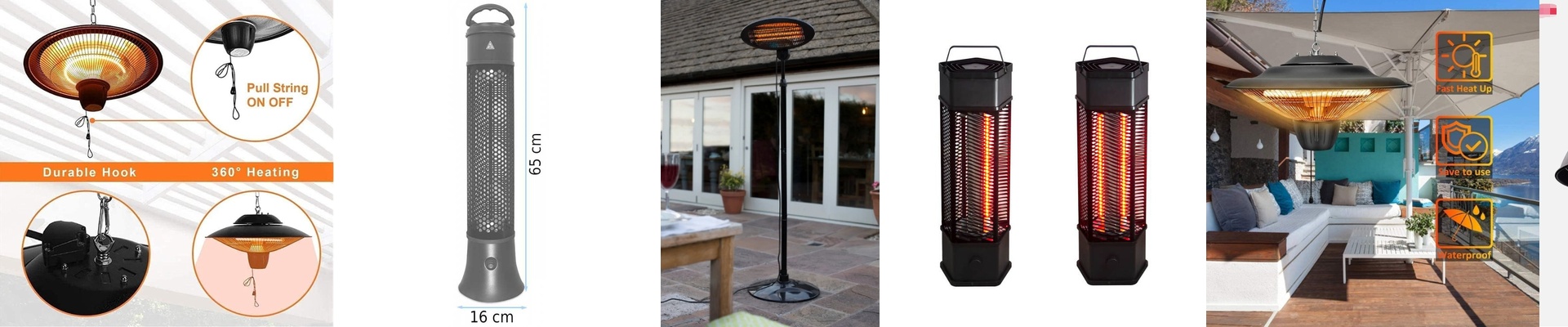
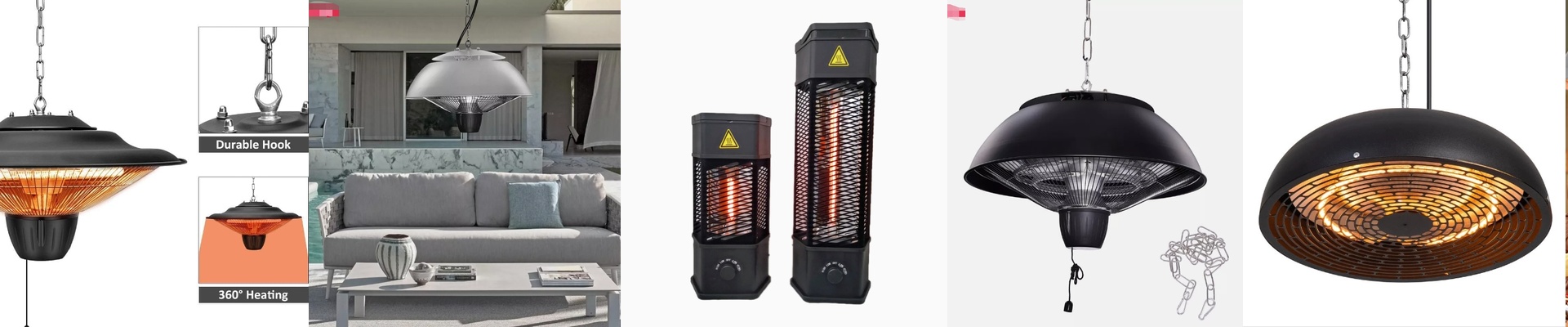

Why we put our bathroom infrared heaters through the wringer
We build waterproof infrared table heaters for bathrooms because, let’s be honest, that room is brutal. Steam, condensation, and constant temperature swings will wreck ordinary gear in no time. So it doesn’t matter how pretty a lamp looks when it leaves the factory. What matters is whether it can survive month after month of that hostile environment. That’s why every single unit goes through strict damp-heat aging. We essentially force the heater to live in a sauna, cycling through high humidity and repeated heat-up/cool-down sessions. This test is brutal on purpose. It makes weak seals, flimsy internal connections, and marginal materials fail early—before they can fail you. If it makes it through, you get a heater that just keeps working, even when the bathroom turns into a tropical storm.
The power behind the warmth: voltage, wattage, and size
We design these heaters to be dependable workhorses in a small footprint. Depending on what you need, they run on 220–240V or 400V. Higher voltage lets us pack in more wattage without the wiring getting out of hand. The result? You get a rapid temperature rise in a compact space. We match the wattage to the area you want to heat, so you get fast, directional warmth without over-engineering the whole setup. And the dimensions? We kept them short and lean, so the lamp fits into tight spots on a table or fixture, but still has plenty of surface area to do its job.
What’s inside: halogen, quartz, and a serious seal
Inside, a halogen element sits inside a quartz tube, pumping out stable, shortwave infrared heat. Quartz is tough—it handles high temps and resists thermal shock like a champ. But even quartz needs protection where moisture can sneak in. So we add a waterproof coating and seal every critical joint, blocking water at the ends and along the barrel. For hooking it up, we use connectors like R7s and SK15. They provide a secure, low-resistance connection that’s quick to wire and stays tight, even when things get a little shaky from vibration or the natural expansion and contraction from heat.
Built for bathroom heat, not just any heat
This whole design is obsessed with one thing: bathroom infrared heating. And in a bathroom, waterproofing isn’t optional—it’s everything. The aging test proves the entire build—the seals, the terminals, the coating—can handle the real-world damp conditions. What you end up with is a heater that delivers fast spot heating, takes up almost no space, and is straightforward to install. Just remember, with that kind of power density, you need proper ventilation and wiring. Plan your heat management and protection accordingly.