
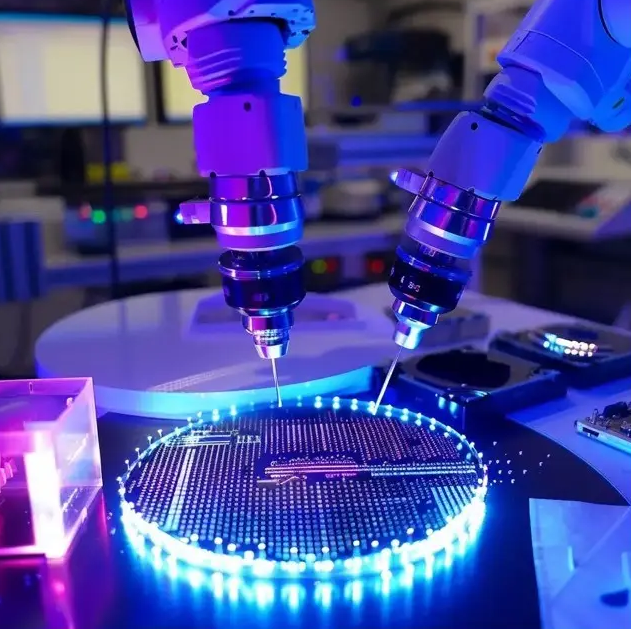
On the lithography floor, you know the drill: a half-degree drift in bake temperature and your photoresist profile starts to walk. Linewidth control, adhesion, defect density—all of it hinges on nailing the thermal step. We built our infrared lamps to keep that thermal budget honest. The technical core is straightforward. Short-wave infrared hits the wafer directly, ramps fast, and holds tight uniformity. We spec quartz halogen emitters tuned for a quick thermal ramp and a stable steady state, delivering wafer-level uniformity within ±0.1°C across the bake surface. Soft bake and hard bake profiles run with repeatable temperature control, so critical dimensions stay in spec lot after lot. Cleanroom compatibility is engineered in—low outgassing materials, sealed assemblies, and zero particle generation keep particle counts in Class 1–100 environments where they need to be. These units are built for 24/7 reliability, routinely racking up 5,000+ hours while holding output within tight tolerances. Here is why this matters: uptime and yield live and die on consistency. You lock in bake profiles, cut photoresist rework, and stop scrapping wafers due to thermal non-uniformity. The fast thermal response trims cycle time without giving up control, and stable output keeps energy waste from overshoot and recovery out of the process. In practice, you see tighter CD distribution, fewer defects, and maintenance windows you can actually plan around. One practical note: infrared lamps demand precise mounting distance and line-of-sight alignment to hold uniformity. Plan for tool-specific integration, and verify thermal coupling with your hotplate or proximity bake stage. Confirm voltage and connector compatibility early to avoid scrambling in the field. Get the alignment right, and the system runs as designed—consistent, repeatable, and under control.