
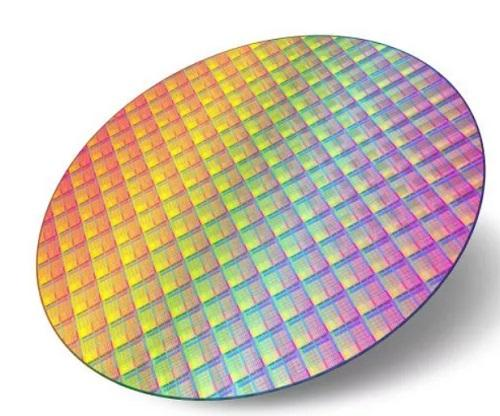
Post-CMP drying is one of those quiet yield killers on the fab floor. Water marks, micro-scratches, and particle re-deposition usually come down to the same thing—unstable heat and uneven thermal profiles. A post-CMP wafer drying heater can’t just push warm air. It has to give you repeatable, wafer-level thermal control that keeps every run inside the process window. What matters under the hood We built the drying heater around fast-response heating elements and high-accuracy sensors, so wafer-level uniformity holds at ±0.1°C. The control algorithm compensates when thermal load shifts—carrier moves, door cycles, gas flow changes—so temperature across the wafer stays steady. Cleanroom compatibility is baked in: materials and seals rated for Class 1–100, and surfaces finished to keep particle generation low. Output repeatability holds up around the clock, and field data shows zero unplanned downtime. Why this matters after CMP Right after CMP, the wafer surface is chemically active and mechanically sensitive. Keep the heat consistent and you avoid softening the photoresist and you protect pattern integrity during drying. Uniform thermal distribution also kills the hot spots that drive streaking. The payoff is lower defect density, fewer rework lots, and cycle times that don’t wander. Energy use drops because the system hits setpoint fast and holds it without overshoot, and service intervals stretch since the components run within their thermal stress ratings. What you need to plan for Installation means lining up the equipment footprint, gas supply, and exhaust. Expect a tight commissioning window to dial in airflow and temperature setpoints to match your CMP stack and rinse chemistry. Keep sensors and optics on a regular calibration schedule to maintain that ±0.1°C uniformity. That one practice is the most reliable way to keep yield stable over time.