
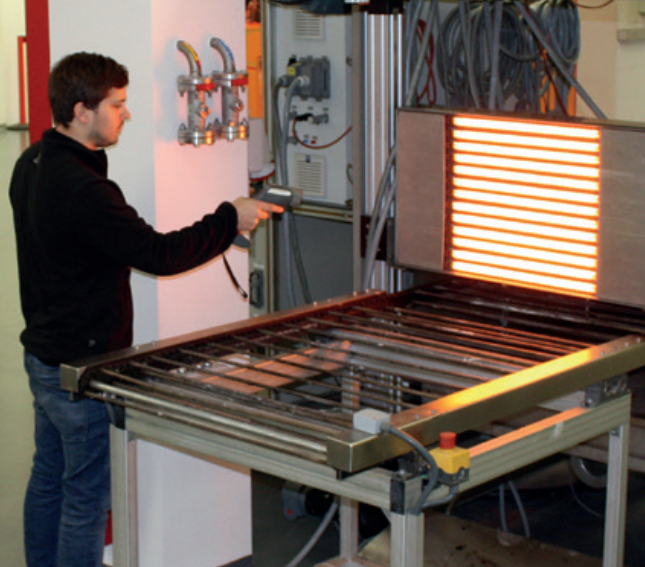
Making hydrogen sensors is all about getting the heat exactly right. If your thermal management is off, your chemical stability goes out the window and your accuracy disappears. We build our fabrication heaters to take a beating in extreme environments, but honestly? The heat isn’t even the hardest part. The real headache is the electrical insulation. Why we test every single tube In this kind of high-precision work, one tiny bit of leakage current can wreck an entire batch of sensors or, worse, fry your control board. That’s why we don’t do “spot checks” or “sampling.” Every single tube we make goes through a full voltage withstand and insulation resistance test before it even hits the shipping dock. We push the insulation to the breaking point to make sure there isn’t a single pinhole in the coating or a hairline fracture in the quartz. If it fails the hipot test, it goes in the trash. Simple as that. It’s a lot of work, but it beats the hell out of dealing with a catastrophic short circuit once you’ve already wired everything into your production line. Dealing with high-voltage stress To get the heat density you need for fast fabrication, you have to run high voltage. But that puts a massive amount of stress on the electrical terminations. To keep things from arcing, we use reinforced seals and high-grade insulators. Just a heads-up: make sure your housing is grounded properly. If it isn’t, that high voltage can migrate, and you’ll start seeing erratic sensor readings or your safety relays tripping for no apparent reason. The trade-off: Speed vs. Stability High-watt density heaters are great because they ramp up fast, which means you get more product out the door. But there’s a catch: thermal shock. If you cycle these heaters too aggressively without a controlled ramp, you’re asking for a cracked substrate. I always recommend pairing these with a PID controller so you don’t overshoot your target temperature. Also, take a look at your cooling system. It needs to handle the ambient heat soak. If it can’t, your insulation resistance will start to dip over time as the materials just wear out from the constant heat.