
Cutting Carbon in Chip Making with Ozone-Free IR
Making semiconductors takes a massive amount of heat and precision. But let’s be honest: the way we’ve traditionally handled those thermal processes is a bit of a carbon nightmare. We’re trying to fix that by using ozone-free infrared (IR) lamps. It’s a simpler way to stop wasting energy and quit dealing with the nasty byproducts that usually come with short-wave radiation.
The deal with ozone
Here is the problem with standard short-wave IR lamps. They pump out radiation in the 185nm to 254nm range, which basically turns the oxygen in your air into ozone (O3). In a cleanroom, ozone is a total pain—it’s a contaminant you really don’t want. We solved this by using doped filaments or special quartz coatings that block out that VUV (Vacuum Ultraviolet) spectrum. You still get all that intense heat density, but without the gas buildup. And because you aren’t fighting ozone, you can ditch those massive, power-hungry extraction systems. That’s a huge win for your facility’s total energy bill.
Making it work in the real world
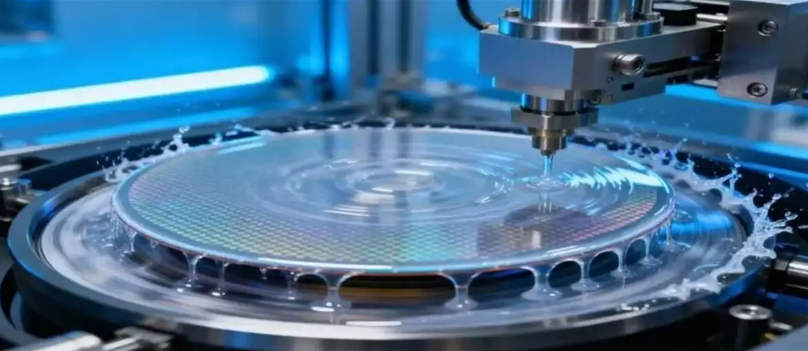
These lamps are built for speed. We’re talking high wattage and fast ramp-up times. The goal is to kill “idle heat”—that wasted energy that happens when a machine is just sitting there warming up. Instead of heating up the entire chamber like a giant oven, we aim the heat directly at the wafer. It’s a much smarter way to use electricity. Plus, the hardware is designed to be a drop-in replacement. You can swap it into your existing curing or baking stations without ripping everything out. We use reinforced quartz, too, so the lamps don’t crack when you cycle the temperature up and down quickly.
The tricky parts
Now, it’s not all magic. There are some trade-offs. When you push for those lightning-fast ramp rates, your power supplies feel the strain. You’ll need to make sure your electrical panels can handle the peak inrush current, or you’re going to have a bad day. Distance is also key. If the lamps are too close, you’ll get hot spots on the wafer. Too far? You lose the efficiency that makes this whole carbon-cutting thing work. We also add shielding to make sure the heat stays where it belongs and doesn’t bleed into the machine chassis.