
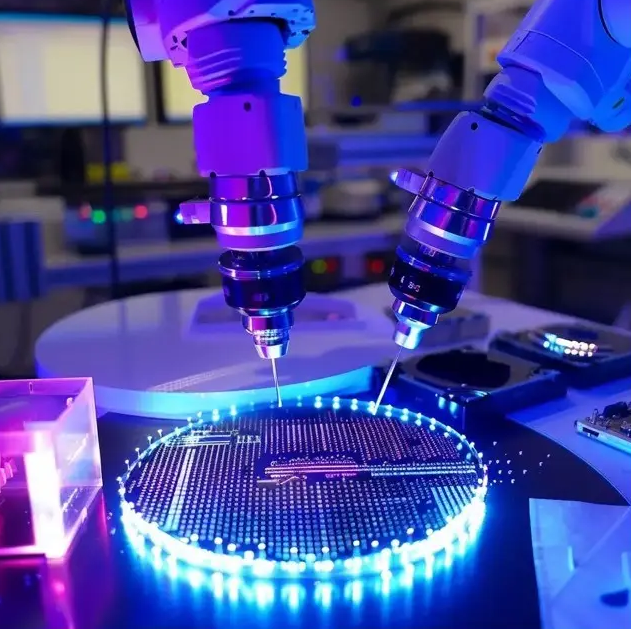
Stop Wasting Energy on Bio-Sensor Production
Making bio-sensors takes a lot of heat. You have to cure them and dry them out just right, or the whole thing fails. For years, the standard has been using big convection ovens. But here’s the problem: you’re basically heating up a massive box of air just to warm up a tiny, thin-film sensor. It’s a huge waste of power. That’s why we’ve switched to infrared (IR) lamps.
Why IR actually works
We use short-wave IR emitters because they don’t mess around with the air. Instead of waiting for the room to get hot, the energy goes straight into the substrate. Think of it like the sun hitting your skin on a cold day. You feel the heat instantly, even if the air around you is freezing. By matching the wavelength to the sensor material, we stop the energy from bouncing off or leaking. It cuts down the kilowatt-hours per wafer and actually makes the “green factory” idea something real, not just a buzzword.
The tricky part: Balance
We use halogen gas inside high-purity quartz envelopes. The best part? They hit the target temperature in seconds. No more waiting around for an oven to preheat. But you can’t just crank the power to max. If you dump too many watts into a small area, you’ll warp the sensor base or cause thermal shock. It’s a delicate balance. We spend a lot of time calibrating the lamp arrays so the heat is spread evenly. Nobody wants to scrap an entire batch because of a few “hot spots.”
Fitting it into the line
The cool thing about IR arrays is that they don’t take up much space. You can put them right into the fabrication line, so the curing happens as the sensors move along. The only catch is the distance. It’s a tight window. Too close, and you’ll fry the organic layers of the sensor. Too far, and the process slows down. To keep things steady, we use closed-loop PID controllers. It keeps the temperature exactly where it needs to be, which is the only way to ensure those medical-grade sensors actually stay stable.