
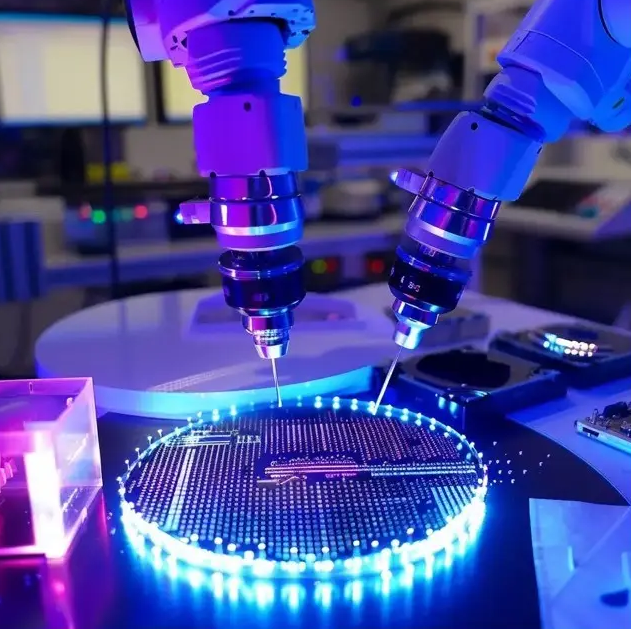
Getting the Heat Right in Biosensor Fabrication
When you’re making biosensors, the curing and drying cycles are where things usually go sideways. If you’re trying to run a modern, “smart” fab, you quickly realize that those old-school convection ovens just don’t cut it. They’re too slow. That’s why we lean on infrared (IR) systems. Instead of heating the air and hoping for the best, IR sends energy straight to the target. You hit your temperature in seconds. Plus, it saves a ton of floor space.
Why Digital Control Actually Matters
Here’s the thing: your heating system needs to actually talk to your PLC. We use IR lamps paired with PID controllers so the heat output matches your data logs exactly. In a data-driven setup, the biggest headache is usually “thermal lag”—that annoying delay between when you tell a machine to heat up and when it actually does. With IR, that lag is basically gone. You flip a switch, and the heat is there. It’s the only way to make sure the first wafer looks exactly like the ten-thousandth.
The Hardware Trade-offs
Depending on what your biosensor substrate is made of, we usually go with either short-wave or medium-wave quartz elements. To keep cycle times low, you need a lot of wattage in a small space. But there’s a catch. Pushing that much power into a tiny tube creates a serious heat soak problem. If you run these lamps at 100% all the time, your housing and wiring need to be heavy-duty. If they aren’t, you’re just waiting for your connectors to melt.
Fitting it Into the Fab
We keep the wiring modular because nobody wants to spend a whole day recalibrating a machine just because a bulb burned out. We use standardized connectors, so when a lamp hits its end-of-life, you just pop it out and drop a new one in. And since the IR output is linked to the central monitoring system, you can see exactly how much power you’re using per unit. It gives you a real, honest look at the thermal cost of every single sensor that rolls off the line.