
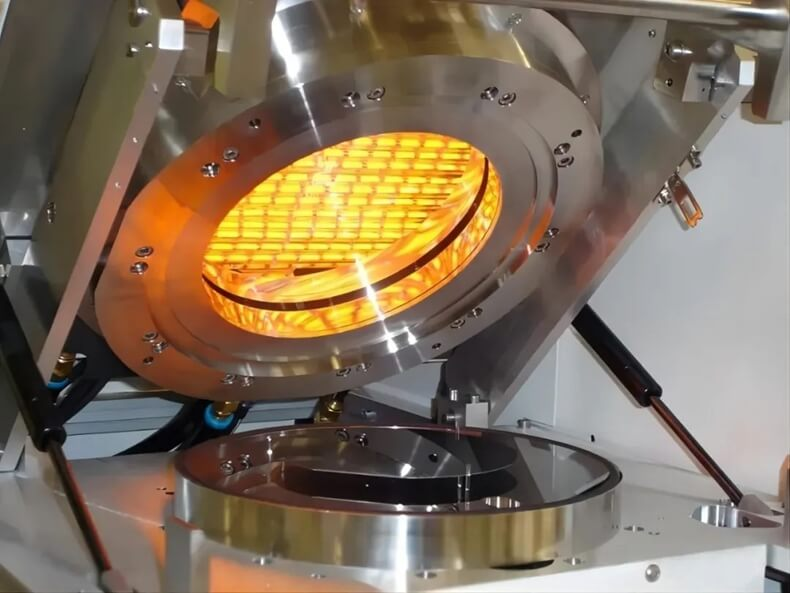
Getting IR Curing Right in Biosensors and Semiconductors
When you’re building biosensors, the heat part is a bit of a tightrope walk. You need enough warmth to cure your polymers and get those biological layers to stay put, but if you push it too far, you’ll fry the whole substrate. That’s why we use short-wave infrared (IR) lamps. Instead of heating up the air in a big box and hoping for the best, IR sends energy straight into the material. It’s direct. It’s efficient.
Ditching the Chemicals
Old-school drying ovens are slow. To make them faster, people often lean on heavy metal catalysts or chemical accelerators to force the curing process along. But if you’re trying to hit “lead-free” or “green” standards for semiconductor work, those additives are a nightmare. IR curing lets you skip all that. We just target the specific absorption bands of the bio-ink or photoresist. The heat hits, the cross-linking happens almost instantly, and you’re done. No sketchy chemicals required.
Stop Wasting Power
Think about a traditional oven. It stays hot for hours, even when nothing is inside. It’s a massive waste of electricity. IR lamps are different. They hit full temperature in milliseconds. You can basically flick the power on and off to match the speed of your conveyor belt. Your cleanroom energy bill will thank you. Plus, we usually set these up for high-intensity, short bursts. This stops that annoying “over-bake” problem where the edges of your sensor start to warp because they spent too much time in the heat.
The Reality Check
Now, I won’t tell you it’s a magic fix. IR curing has some quirks. The heat density is intense. If your conveyor belt drifts or your lamp is off by just a few millimeters, you’ll burn right through your bio-layer. It happens. To stop that, you need a solid PID controller and thermocouples that are actually calibrated. Then there’s the reflection issue. If your substrate is too shiny, the IR energy just bounces off—heating up the lamp housing instead of the sensor. You have to pick the right wavelength (usually mid-to-short wave) to make sure the energy actually sinks into the material.